I’ve spent years watching people stand in front of packed closets with nothing to wear.
You probably own more clothes than you need but still feel stuck every morning. That’s not a you problem. That’s a strategy problem.
Most fashion advice throws random tips at you without showing you how to build a wardrobe that actually works. I’m going to change that.
This guide walks you through creating a timeless wardrobe from scratch. Not just what to buy. How to think about style in a way that makes getting dressed easier.
At lwspeakfashion, we analyze runway shows and street style constantly. We break down what makes outfits work beyond the hype and seasonal trends.
You’ll learn how to define your personal style, nail the essentials, and add current trends without losing yourself in them.
No fluff. Just a clear plan you can start using today.
The Wardrobe Foundation: 10 Essential Pieces Every Person Should Own
You open your closet and stare.
A hundred pieces hanging there but nothing feels right. Nothing works together. You end up wearing the same three outfits on repeat because everything else just sits there.
I see this all the time.
People think more clothes equals more options. But that’s backwards. What you need is a solid foundation. Pieces that actually work together and make getting dressed simple.
Some fashion experts will tell you to throw out your basics and focus on statement pieces. They say basics are boring and you need bold items to stand out. And sure, statement pieces have their place.
But here’s what they’re missing.
Without a strong foundation, those statement pieces just collect dust. You can’t build outfits around them because you’ve got nothing to pair them with.
I’ve built my approach at lwspeakfashion around one simple idea. Start with versatile, high-quality basics that form the backbone of countless outfits.
Once you have these ten pieces, everything else becomes easier.
The Essential Ten
The Perfect White T-Shirt
Fit and fabric are everything here. A cheap tee goes see-through or loses its shape after two washes. Look for a heavier cotton with a cut that skims your body without clinging.
Classic Blue or Black Jeans
Finding the right cut for your body changes everything. Straight leg works for most people. Skip the trendy cuts that’ll look dated in six months.
A Tailored Blazer
This piece instantly elevates any look. Throw it over that white tee and jeans? You just went from casual to put-together in five seconds.
A Versatile Knit Sweater
Cashmere or merino wool for longevity. Yes, they cost more upfront. But a good sweater lasts years while cheap ones pill after a month.
The Go-To Dress or Jumpsuit
An easy, one-and-done polished outfit. Perfect for those days when you can’t think straight but need to look decent.
A Classic Trench Coat or Overcoat
Timeless outerwear never goes out of style. Burberry made the trench famous for a reason (it just works).
Smart Trousers
A non-denim option for work or events. You need something that reads more formal than jeans but doesn’t feel stuffy.
Minimalist White Sneakers
The ultimate in comfort and style. They go with everything and you can walk in them all day.
A Structured Leather or Vegan Leather Bag
Functionality meets fashion. Get one with enough pockets to actually hold your stuff without looking like a backpack.
A Simple, Elegant Blouse or Button-Down Shirt
Tuck it in, leave it out, layer it under a sweater. This piece does heavy lifting in your wardrobe.
That’s it. Ten pieces that work together in dozens of combinations.
Start here and build out from there.
From Basics to Brilliance: Actionable Style Tips to Elevate Your Look
You know that feeling when you look at someone and think, “They just get it”?
It’s not about expensive clothes. It’s about knowing what works.
I’m going to walk you through five principles that’ll change how you dress. These aren’t trends that’ll be gone next season. They’re fundamentals that work whether you’re wearing Zara or Gucci.
Master Proportions
This one’s simple but most people get it wrong.
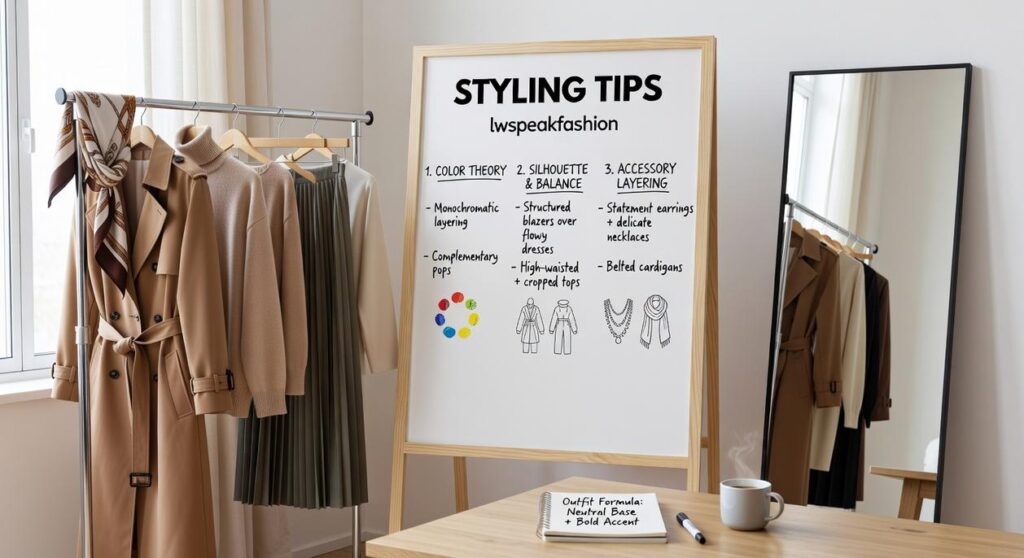
When you wear something loose on top, go fitted on the bottom. Wide-leg trousers? Pair them with a fitted turtleneck or bodysuit. Oversized blazer? Slim jeans or tailored pants underneath.
The reason this matters is visual balance. Your body needs definition somewhere or you’ll just look like you’re drowning in fabric.
The Power of a Third Piece
Here’s what separates an okay outfit from one that looks intentional.
That third layer. A blazer over your t-shirt and jeans. A cardigan thrown over a dress. Even a structured vest can do the job.
It tells people you thought about what you’re wearing. Plus it gives you something to take off if you get hot (which beats standing there sweating through your shirt).
Strategic Accessorizing
Accessories are where basic becomes interesting.
A belt can cinch a loose dress and create shape where there wasn’t any. A silk scarf adds color without committing to a whole new top. Statement earrings pull focus to your face.
The trick is picking one or two pieces per outfit. Not everything at once.
The Art of the Tuck
This sounds too easy to matter but watch what happens.
A front tuck (just tucking in the front center of your shirt) breaks up a long torso and shows your waistline. A full tuck works when you want polish and structure.
No tuck? That’s fine too, but make it a choice. The difference between styled and sloppy often comes down to this one move.
Playing with Textures
Silk blouse with denim jeans. Leather jacket over a chunky knit. Linen pants with a cotton tee.
Mixing textures adds depth to what you’re wearing. It keeps things from looking flat or one-dimensional. You can wear a monochrome outfit and still make it interesting just by varying the materials.
These lwspeakfashion principles work because they’re about understanding how clothes interact with your body and with each other.
Start with one. Get comfortable. Then add another.
Navigating the Now: How to Incorporate Trends Mindfully

Here’s what nobody tells you about trends.
Most of them won’t matter in six months.
I see it every season. Someone drops $800 on a full trendy outfit and by next year it’s collecting dust in their closet. That’s not style. That’s just expensive regret.
But here’s where people get it wrong on the other side too.
Some say you should ignore trends completely. Stick to basics and never touch anything current. They argue that trends are wasteful and you’ll always look dated chasing them.
I get the logic. But you know what happens when you avoid trends entirely? You end up looking like you stopped caring in 2015.
The real answer sits somewhere in between.
The difference between a trend and a fad? Trends have staying power because they solve a real style problem. Fads are just noise.
Take quiet luxury. It’s been around for three years now and it’s not going anywhere. Why? Because people actually want clothes that look expensive without screaming for attention. That’s a real shift in how we think about dressing well.
Same with relaxed denim silhouettes. We’re not going back to spray-on skinny jeans (thank god). The data backs this up too. According to NPD Group’s 2023 fashion report, loose-fit denim sales jumped 34% while skinny jean sales dropped another 18%.
Strategic color is another one that’s sticking. Not head-to-toe neon. Just intentional pops that make your outfit work harder.
Here’s my rule for fashion hacks lwspeakfashion: one trendy piece per outfit. That’s it.
Your base stays classic. Then you add one current element.
Let me show you what this looks like in real life.
Say you see an oversized blazer on the runway. Boxy cut, exaggerated shoulders, the whole thing. You don’t need that exact piece for $2,000.
Here’s the translation: Grab a relaxed blazer in a neutral tone. Pair it with your straight-leg jeans and a simple white tee. Add loafers (a trend that’s proven itself over four seasons now). That’s it.
You look current without looking like you’re trying too hard. And next year when proportions shift again? You’ve only got one piece to swap out instead of rebuilding your entire wardrobe.
The Sustainable Style Mindset: Fashion That Feels Good and Lasts
Let me tell you something most fashion blogs won’t.
Sustainable fashion isn’t about guilt. It’s about being smarter with your money.
I see people drop $200 on fast fashion every month. Then they wonder why their closet feels empty six months later. The seams split. The colors fade. The whole thing falls apart.
Here’s what nobody talks about: cost per wear.
Take a $300 jacket. Sounds expensive, right? But wear it 100 times and you’re paying $3 per wear. Compare that to a $50 jacket you wear twice before it looks worn out. You just paid $25 per wear.
The math changes everything.
I calculate this for every piece I buy now. It’s simple. Take the price and divide it by how many times you’ll actually wear it. A $150 pair of jeans you wear weekly for three years? That’s pennies per wear.
Natural fibers last longer. Cotton, wool, linen. They breathe better and hold up when you wash them. Synthetic blends might feel okay in the store, but they pill and stretch out fast.
Want to know what really separates people who dress well from everyone else? They take care of their clothes.
I’m talking about basic stuff. Read the care labels. Use cold water. Air dry when you can. Get a steamer instead of ironing everything (it’s gentler on fabric and faster).
Second-hand markets are where I find my best pieces now. Not thrift stores where you dig through piles for hours. I mean curated vintage shops and online consignment platforms. You can find designer pieces at 70% off retail because someone wore them twice.
The quality difference is obvious when you hold a well-made garment. The weight of the fabric. The way the seams lie flat. How the buttons actually stay on.
This is the stuff you won’t find in typical fashion tips lwspeakfashion articles that just tell you to “buy less.”
Because buying less isn’t the point. Buying better is.
Your Style, Defined and Perfected
You came here feeling stuck in front of your closet.
That “nothing to wear” frustration is real. I get it because I’ve helped thousands of people work through it.
This guide gave you the complete toolkit to move from confusion to confidence. You now have a clear strategy.
Build on your essentials. Apply smart styling principles. Adopt trends mindfully when they work for you.
You’re in full control now.
Here’s what you do next: Open your closet right now and identify three wardrobe essentials you already own. Tomorrow morning, use one new styling tip from lwspeakfashion that you learned here.
That’s it. Just start.
Your wardrobe isn’t the problem anymore. You have the knowledge to make it work for you.
The confusion ends today. Homepage.
